

How Much Commission Do Real Estate Agents Charge in 2026?
Discover the latest real estate commission rates for residential, commercial, rental, luxury, and off-plan properties. Learn How Much Commission Real Estate Agents Charge in different transaction types and understand who pays the commission, how fees are calculated, and what factors influence agent earnings in today’s property market.
Understanding Real Estate Agent Commission
Who pays Commission?
Sellers, buyers, tenants, or developers — depending on the deal type.
Buyer vs seller commission
Sellers usually pay on resale; buyers may pay agency fees on secondary buys.
How agents earn income
Pure commission, hybrid retainers, or salary-plus-bonus at large brokerages.
Typical commission models
Flat fee, percentage of price, or tiered structures on developer launches.
How Much Commission Do Real Estate Agents Charge?
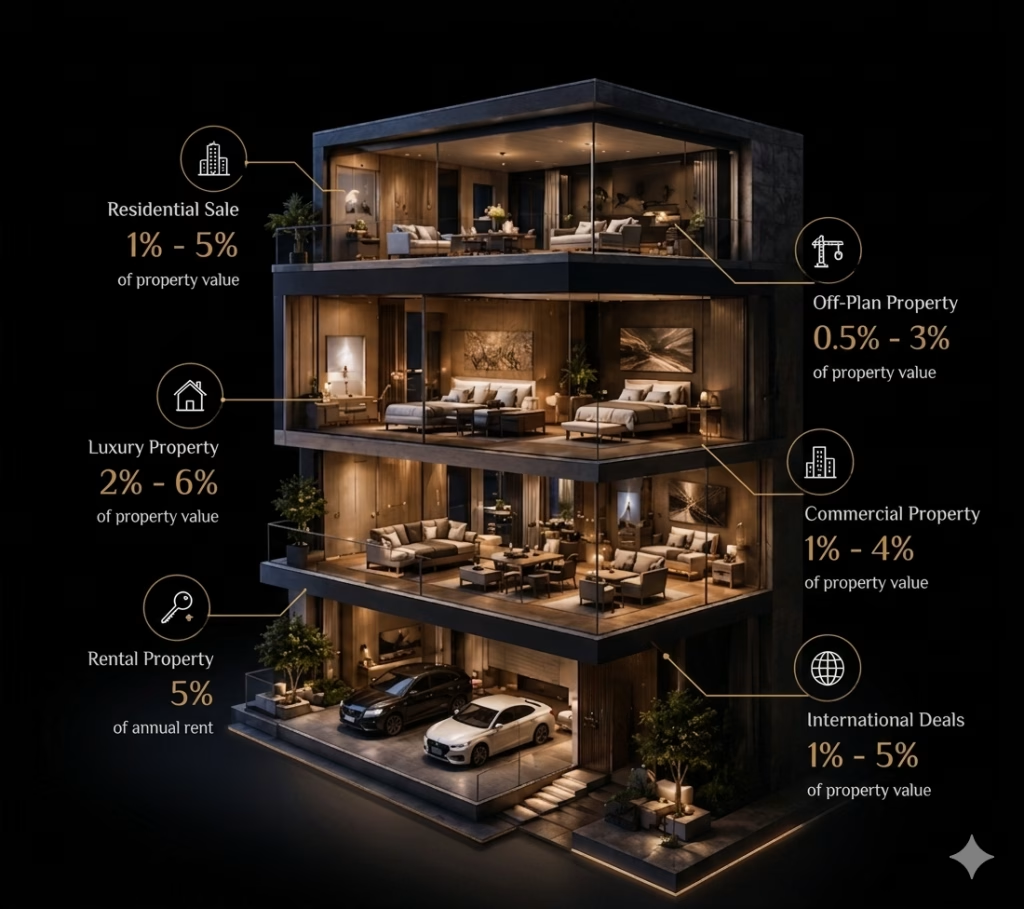
Real estate agent commissions vary depending on the property type, location, market conditions, and the services provided by the agent. Understanding How Much Commission Real Estate Agents Charge is important for buyers, sellers, landlords, tenants, and investors who want to accurately estimate the total cost of a property transaction. In 2026, the average commission for residential property sales typically ranges from 1% to 5% of the property’s sale price. In many markets, the seller pays the commission, which may then be shared between the listing agent and the buyer’s agent. However, commission structures can differ significantly based on local regulations, brokerage agreements, and transaction complexity.
When evaluating How Much Commission Real Estate Agents Charge, it’s important to consider the value they provide throughout the buying or selling process. Professional agents assist with property marketing, pricing strategies, negotiations, market analysis, legal documentation, buyer sourcing, and transaction management. Their expertise can help clients secure better deals while reducing risks and delays. For off-plan properties, developers often pay commissions directly to agents, meaning buyers may not incur additional agency fees. Luxury and high-value properties frequently operate under negotiable commission agreements, while rental properties commonly involve a fee equivalent to a percentage of the annual rent. Commercial real estate transactions may also have customized commission structures based on property value and investment complexity.
Residential Sale 1% – 5%
Standard commission for villas and apartments. Most agencies in 2026 charge 2% of the property value, split between buyer's and seller's agents in certain markets.
Off-Plan Property
Varies
For off-plan units, developers typically pay the agent directly often 2% to 6% meaning the buyer pays no commission to the agent at all.
Luxury Property
Negotiable
Trophy assets and ultra-prime listings allow more flexibility. Commissions are often negotiated based on exclusivity, marketing scope, and final sale price.
Rental Property
5% of annual rent
Long-term rentals usually carry a one-time agency fee equal to 5% of the yearly contract value, paid by the tenant on signing.
Commission Costs for Buyers and Sellers
Understanding How Much Commission Real Estate Agents Charge is essential for anyone involved in a property transaction. Whether you are purchasing your first home, investing in an off-plan development, or selling a luxury property, commission fees and related transaction costs can significantly impact your overall budget. In 2026, real estate commissions continue to be one of the most common expenses associated with buying and selling property. For buyers, costs may include agency fees, registration charges, transfer fees, mortgage registration expenses, and administrative processing fees. Depending on the market and property type, buyers may be required to pay a commission directly to the agent or brokerage facilitating the transaction. Knowing How Much Commission Real Estate Agents Charge allows buyers to plan their finances more effectively and avoid unexpected expenses during the purchase process.
For sellers, commission fees are often based on a percentage of the final sale price. These fees compensate agents for marketing the property, arranging viewings, negotiating offers, managing documentation, and overseeing the transaction from listing to completion. Sellers who understand How Much Commission Real Estate Agents Charge can better evaluate service offerings and negotiate commission structures that align with their goals. While commission rates vary by location and property category, professional real estate agents provide valuable expertise that can help maximize sale prices, attract qualified buyers, and streamline the transaction process. Understanding these costs helps both buyers and sellers make informed decisions and achieve better outcomes in today’s competitive property market.
Buyer expenses
- Agency fee: typically 2% of purchase price
- DLD transfer fee: 4% of property value
- Registration fees: AED 2,000 – 4,000
- Mortgage registration: 0.25% of loan amount

Seller expenses
- Agency commission: usually 2% of sale price
- NOC fee from developer: AED 500 – 5,000
- Trustee office transfer fee
- Mortgage release (if applicable): 1% + AED 1,290
Commission Opportunities Across Leading Developers
When evaluating property investments, many investors and real estate professionals consider not only property value and location but also How Much Commission Real Estate Agents Charge and the earning opportunities available through leading developers. Major developers often establish competitive commission programs to encourage agent participation and increase sales performance across residential, commercial, and off-plan projects. Leading developers frequently offer attractive commission structures that vary based on project type, launch phase, sales targets, and promotional campaigns. Agents who understand How Much Commission Real Estate Agents Charge within developer partnerships can identify projects that offer stronger earning potential while delivering value to their clients. Commission incentives may include higher percentage payouts, milestone bonuses, exclusive launch rewards, and post-handover incentives.
Developers known for premium residential communities, luxury developments, waterfront projects, and branded residences often create specialized commission programs designed to attract experienced real estate professionals. These programs not only reward agents for successful transactions but also contribute to stronger market exposure and faster project sales. Understanding How Much Commission Real Estate Agents Charge across different developers enables investors, buyers, and industry professionals to gain greater transparency into transaction costs and commission structures. By comparing commission opportunities among leading developers, stakeholders can make more informed decisions and better evaluate the overall value of each property investment opportunity.
Emaar Properties
The developer behind Downtown Dubai, Burj Khalifa, and Dubai Marina a benchmark for high-volume agent transactions.
Property types:
Apartments, villas, branded residences
Investment appeal
Strong capital appreciation and global brand recognition.
% Agent commission
Up to 4% on off-plan launches with bonus tiers for top agents.
DAMAC Properties
Known for branded collaborations (Cavalli, de GRISOGONO) and high-yield investor units across Dubai.
Property types:
Branded apartments, golf villas, serviced residences
Investment appeal
Aggressive launch incentives and post-handover plans.
% Agent commission
3% – 5% plus seasonal commission boosters.
Sobha Realty
Premium build quality and end-to-end in-house construction. Sobha Hartland is a flagship investor destination.
Property types:
Luxury apartments, waterfront villas
Investment appeal
Quality-driven resale value and long-term tenant demand.
% Agent commission
Typically 4% with milestone payouts.
Nakheel
Creator of Palm Jumeirah and Dubai Islands communities that command premium pricing and resale velocity.
Property types:
Beachfront villas, waterfront apartments
Investment appeal
Limited supply on iconic addresses drives competition.
% Agent commission
2% – 4% with exclusivity bonuses on select towers.
Zenith Group
Rising boutique developer focused on design-led mid-market and luxury communities in growth corridors.
Property types:
Boutique apartments, signature villas
Investment appeal
Early-mover advantage with attractive payment plans.
% Agent commission
Up to 6% on launch inventory for partnered brokers.
What Determines Real Estate Agent Commission?
How Much Commission Real Estate Agents Charge are not fixed and can vary significantly depending on several factors. Understanding How Much Commission Real Estate Agents Charge requires looking beyond standard percentage rates and examining the specific circumstances of each transaction. Property value, market conditions, location, property type, and the level of service provided by the agent all play a role in determining commission structures. One of the most important factors influencing How Much Commission Real Estate Agents Charge is the type of property being sold or leased. Residential properties typically follow standard commission models, while luxury homes, commercial assets, and off-plan developments often involve customized agreements. High-value transactions may result in negotiable commission rates due to the larger overall deal size, whereas smaller transactions may carry higher percentage-based fees.
Market conditions also have a significant impact on commission rates. In highly competitive markets where demand is strong and properties sell quickly, commission percentages may be more flexible. Conversely, in slower markets where properties require extensive marketing efforts and longer selling periods, agents may charge higher commissions to compensate for the additional time and resources invested. The scope of services provided by the agent is another key factor. Full-service agents often handle property valuation, professional marketing, photography, virtual tours, lead generation, buyer screening, negotiations, legal documentation, and transaction management. Clients evaluating How Much Commission Real Estate Agents Charge should consider the complete range of services included, rather than focusing solely on the commission percentage.
Property value
Higher tickets often mean lower percentages but larger absolute fees.
Market conditions
Hot markets compress commissions; slow markets expand them.
Developer incentives
Launch bonuses and tiered payouts directly raise effective rates.


Agent experience
Top producers command premium retainers and exclusive listings.
Property location
Prime districts attract higher absolute commissions per deal.
Exclusive listings
Sole mandates usually carry a higher negotiated percentage.
How Much Commission Do Real Estate Agents Charge in 2026?
If you are planning to buy, sell, or invest in property, one of the first things you need to understand is How Much Commission Real Estate Agents Charge in 2026. Real estate commission plays a key role in the overall cost of any transaction, and it varies based on property type, location, and market conditions. In today’s evolving property market, commission structures are becoming more flexible, with traditional percentage-based models still widely used alongside negotiable and performance-based agreements. Knowing How Much Commission Real Estate Agents Charge helps buyers and sellers make smarter financial decisions and avoid unexpected costs during transactions.
What Is Real Estate Agent Commission?
Real estate agent commission is the fee paid to a property professional for successfully completing a transaction. This fee is usually calculated as a percentage of the final sale price and is shared between the buyer’s and seller’s agents in most cases. Understanding How Much Commission Real Estate Agents Charge is important because it directly affects your total property expenses. Agents earn this commission by providing essential services such as marketing the property, handling negotiations, managing paperwork, and ensuring a smooth closing process.
How Much Commission Real Estate Agents Charge rates vary depending on the property segment and complexity of the deal. On average, residential properties typically incur a commission of 1% to 5% of the sale value. Luxury properties often have negotiable commission structures due to higher transaction values and specialized services. Off-plan properties are usually handled differently, as developers pay agents directly, which can range from 2% to 6% in incentives. Rental properties may involve a fee based on a percentage of annual rent, while commercial transactions usually have customized agreements. Understanding How Much Commission Real Estate Agents Charge across these categories helps investors and homeowners plan their budgets more effectively.
Who Pays the Commission?
The responsibility of paying the commission depends on the type of transaction and local market practices. In most residential property sales, the seller pays the commission, which is then divided between the listing agent and buyer’s agent. In rental agreements, either the landlord or tenant may be responsible for the fee depending on the region. In off-plan developments, developers often cover agent commissions as part of their sales strategy. In commercial real estate, commission payment terms are usually negotiable between all parties involved. Knowing How Much Commission Real Estate Agents Charge also includes understanding who is responsible for paying it in each situation.
Several factors determine How Much Commission Real Estate Agents Charge, and these can vary widely from one transaction to another. Property type is one of the most important factors, as residential, commercial, luxury, and off-plan properties all follow different commission structures. Market conditions also play a major role, as competitive markets may lead to lower commissions while slower markets may require higher fees due to increased effort. The experience and reputation of the agent can also impact commission rates, with top-performing agents often charging higher percentages. Additionally, the level of service provided—such as marketing, negotiations, and full transaction management—can significantly influence the final commission.
Why Do Agents Charge Commission?
Real estate agents charge commission as compensation for the wide range of services they provide throughout a transaction. These services include property valuation, marketing campaigns, client sourcing, negotiation support, legal documentation handling, and closing coordination. Without professional agents, property transactions would be far more complex and time-consuming. Therefore, understanding How Much Commission Real Estate Agents Charge also means understanding the value they bring to both buyers and sellers in ensuring successful and efficient property deals.
If you are concerned about How Much Commission Real Estate Agents Charge, there are several ways to reduce costs without compromising service quality. One option is to negotiate commission rates directly with the agent before signing any agreement. Another approach is to compare multiple agents or brokerages to find the most competitive offer. In some cases, sellers may opt for limited-service agents who charge lower fees for basic support. Developers may also offer commission-free deals in off-plan projects, which can significantly reduce costs. Being informed about How Much Commission Real Estate Agents Charge gives you better control over your negotiation power.
Frequently Asked Questions
1. How much commission do real estate agents charge in 2026?
Most agents charge between 1% and 5% for residential properties, depending on the market and service level.
2. Who pays real estate agent commission?
In most cases, the seller pays, but it can vary based on property type and region.
3. Do buyers ever pay commission?
Yes, in some markets and rental transactions, buyers or tenants may share or pay the fee.
4. Why do commission rates vary so much?
They depend on property type, location, agent experience, and market conditions.
5. Can commission fees be negotiated?
Yes, real estate commissions are often negotiable, especially in high-value transactions.
Conclusion
In conclusion, understanding How Much Commission Real Estate Agents Charge in 2026 is essential for anyone involved in real estate transactions. Commission rates vary depending on property type, market conditions, agent expertise, and service level, but they typically fall within predictable ranges. By understanding how these fees work and who is responsible for paying them, buyers and sellers can make more informed and confident decisions. Ultimately, being aware of How Much Commission Real Estate Agents Charge helps you better plan your investment strategy and maximize the value of every property deal.
How Much Commission Do Real Estate Agents Charge in 2026?
If you are planning to buy, sell, or invest in property, one of the first things you need to understand is How Much Commission Real Estate Agents Charge in 2026. Real estate commission plays a key role in the overall cost of any transaction, and it varies based on property type, location, and market conditions. In today’s evolving property market, commission structures are becoming more flexible, with traditional percentage-based models still widely used alongside negotiable and performance-based agreements. Knowing How Much Commission Real Estate Agents Charge helps buyers and sellers make smarter financial decisions and avoid unexpected costs during transactions.
What Is Real Estate Agent Commission?
Real estate agent commission is the fee paid to a property professional for successfully completing a transaction. This fee is usually calculated as a percentage of the final sale price and is shared between the buyer’s and seller’s agents in most cases. Understanding How Much Commission Real Estate Agents Charge is important because it directly affects your total property expenses. Agents earn this commission by providing essential services such as marketing the property, handling negotiations, managing paperwork, and ensuring a smooth closing process.
How Much Commission Real Estate Agents Charge rates vary depending on the property segment and complexity of the deal. On average, residential properties typically incur a commission of 1% to 5% of the sale value. Luxury properties often have negotiable commission structures due to higher transaction values and specialized services. Off-plan properties are usually handled differently, as developers pay agents directly, which can range from 2% to 6% in incentives. Rental properties may involve a fee based on a percentage of annual rent, while commercial transactions usually have customized agreements. Understanding How Much Commission Real Estate Agents Charge across these categories helps investors and homeowners plan their budgets more effectively.
Who Pays the Commission?
The responsibility of paying the commission depends on the type of transaction and local market practices. In most residential property sales, the seller pays the commission, which is then divided between the listing agent and buyer’s agent. In rental agreements, either the landlord or tenant may be responsible for the fee depending on the region. In off-plan developments, developers often cover agent commissions as part of their sales strategy. In commercial real estate, commission payment terms are usually negotiable between all parties involved. Knowing How Much Commission Real Estate Agents Charge also includes understanding who is responsible for paying it in each situation.
Several factors determine How Much Commission Real Estate Agents Charge, and these can vary widely from one transaction to another. Property type is one of the most important factors, as residential, commercial, luxury, and off-plan properties all follow different commission structures. Market conditions also play a major role, as competitive markets may lead to lower commissions while slower markets may require higher fees due to increased effort. The experience and reputation of the agent can also impact commission rates, with top-performing agents often charging higher percentages. Additionally, the level of service provided—such as marketing, negotiations, and full transaction management—can significantly influence the final commission.
Why Do Agents Charge Commission?
Real estate agents charge commission as compensation for the wide range of services they provide throughout a transaction. These services include property valuation, marketing campaigns, client sourcing, negotiation support, legal documentation handling, and closing coordination. Without professional agents, property transactions would be far more complex and time-consuming. Therefore, understanding How Much Commission Real Estate Agents Charge also means understanding the value they bring to both buyers and sellers in ensuring successful and efficient property deals.
If you are concerned about How Much Commission Real Estate Agents Charge, there are several ways to reduce costs without compromising service quality. One option is to negotiate commission rates directly with the agent before signing any agreement. Another approach is to compare multiple agents or brokerages to find the most competitive offer. In some cases, sellers may opt for limited-service agents who charge lower fees for basic support. Developers may also offer commission-free deals in off-plan projects, which can significantly reduce costs. Being informed about How Much Commission Real Estate Agents Charge gives you better control over your negotiation power.
Frequently Asked Questions
1. How much commission do real estate agents charge in 2026?
Most agents charge between 1% and 5% for residential properties, depending on the market and service level.
2. Who pays real estate agent commission?
In most cases, the seller pays, but it can vary based on property type and region.
3. Do buyers ever pay commission?
Yes, in some markets and rental transactions, buyers or tenants may share or pay the fee.
4. Why do commission rates vary so much?
They depend on property type, location, agent experience, and market conditions.
5. Can commission fees be negotiated?
Yes, real estate commissions are often negotiable, especially in high-value transactions.
Conclusion
In conclusion, understanding How Much Commission Real Estate Agents Charge in 2026 is essential for anyone involved in real estate transactions. Commission rates vary depending on property type, market conditions, agent expertise, and service level, but they typically fall within predictable ranges. By understanding how these fees work and who is responsible for paying them, buyers and sellers can make more informed and confident decisions. Ultimately, being aware of How Much Commission Real Estate Agents Charge helps you better plan your investment strategy and maximize the value of every property deal.
Our platform provides off-plan and resale opportunities, joint ventures, developer partnerships, and comprehensive property services.